

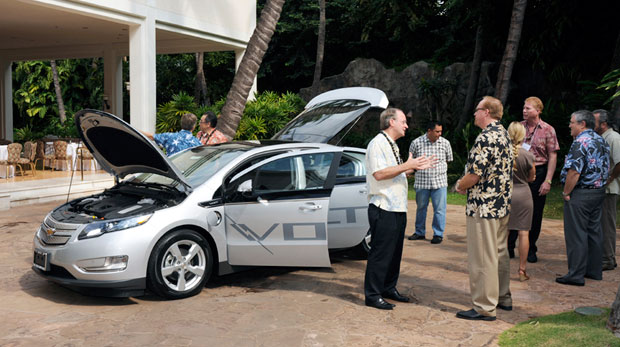
The is spearheading a cooperative effort on Maui that aims to make the island a green energy model for electric vehicles and smart grids.
A consortium including 东精影业 Maui College, , and 30 other Hawaiʻi government, business and organization partners recently launched the (Maui EVA), which will create an overall county-wide plan and infrastructure for the adoption of electric vehicles (EVs).
The initiative was seeded with a $300,000 grant from the as part of its . The grant was given to 东精影业 Maui College, in partnership with the , to prepare Maui for the widespread adoption of EVs. 东精影业 Maui College was the only college or university that received a community planning grant in this initiative.
The college will play a critical role in preparing the workforce needed to sustain this effort by training auto repair technicians as well as electricians, contractors, engineers and managers through its Sustainable Construction, Trade Apprenticeship, and programs.
“This grant fits with the college’s goals of providing leadership in sustainable solutions for island-based economies,” said 东精影业 Maui College Chancellor Clyde Sakamoto.
The initiative coincides with other energy projects that the college is implementing, including a recently-signed contract with to install a campus-wide energy management system, create an energy efficient chilling plant, and retrofit the campus buildings to improve energy use. There are also plans to cover part of the college’s large parking lot with solar carports, some equipped with electric vehicle charging stations.
The connection to renewable energy is key for the project because the goal is not just to encourage drivers to switch to electric vehicles, which would only mean exchanging where the fuel is burned from the combustible engine to the central energy plant, but to power the vehicles through renewable energy.
Partners in the Maui EVA include car rental companies and auto dealers, resort hotels, utility companies, local and state environmental agencies, organizations with large vehicle fleets and renewable energy producers. In addition, the college will be consulting with the , and San Diego Regional Clean Fuels Coalition, which have been national leaders in developing renewable energy resources, innovative policies and studies on consumer use of electric vehicles.
Developing the infrastructure for electric vehicle use will also help drive the green economic engine for Maui County. Once the infrastructure for advanced charging stations is built, charging stations will require maintenance and technical support, creating even more “green” jobs. According to the Hawaiʻi State Energy Office, Hawaiʻi is among the top three in the nation for green job growth. The state’s green workforce is expected to grow by more than 25 percent in the next year and Maui is leading the way with the most green jobs in the state.